
A healthy, green lawn doesn’t just happen by accident—it requires consistency, strategy, and a strong understanding of how lawn care practices support each other. One of the most overlooked combinations is lawn aeration and mowing. Many homeowners know these tasks individually, but few understand how powerful they become when used together. Aeration gives the soil room to breathe, and mowing encourages fresh, dense growth. When both complement each other, your yard becomes thicker, healthier, and more resilient year-round.
If you’re working toward that lush, golf-course-style lawn or simply want to strengthen your grass before the summer heat hits, mastering the relationship between these two processes is essential. Whether you’re maintaining a residential yard or managing commercial property, aeration and mowing play significant roles in your lawn’s long-term development. And for homeowners in New York, expert support is always available through Transiciones Inc.
Let’s explore how aeration and mowing work hand-in-hand to create the vibrant, healthy lawn you’ve always wanted.
Why Aeration Matters in a Healthy Lawn Care Routine
Aeration is the process of pulling small plugs from the soil to loosen compacted areas and improve air, water, and nutrient movement. This lawn aeration process is essential for most grass types because soil naturally becomes compacted over time from foot traffic, rainfall, and even the weight of mowing equipment.
One of the most enormous lawn aeration benefits is deeper root growth. Because oxygen can now move down into the soil more easily, roots expand farther and stronger. With improved airflow and moisture penetration, grass becomes more drought-resistant and less vulnerable to disease.
Additionally, aeration helps reduce thatch buildup. When soil becomes compacted, organic matter can’t break down properly, leading to thatch buildup on the soil surface. Aeration introduces microorganisms that naturally break down this material, helping restore a balanced lawn ecosystem.
How Mowing Supports Long-Term Lawn Health
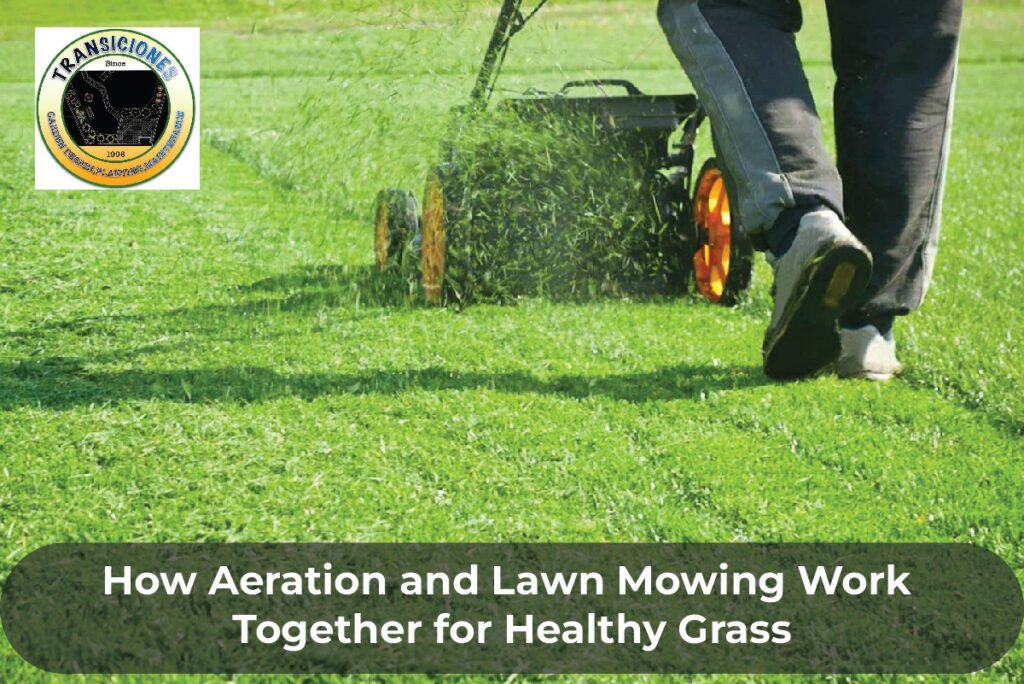
Mowing might seem simple, but it’s one of the most essential elements of an intensive lawn care routine. The right lawn mowing tips, such as maintaining the proper cutting height and sharpening mower blades, make a drastic difference in overall grass health.
Shortcuts can damage grass, especially when combined with poor nutrient uptake. A properly maintained mower ensures clean cuts, reducing stress and boosting the lawn’s ability to absorb sunlight. Mowing also encourages the lawn to grow thicker. Each trim forces the grass to branch outward, creating denser growth over time.
When combined with aeration, proper mowing creates an ideal environment for grass to thrive. After aeration, mowing becomes easier, more effective, and faster because the soil is softer and more responsive.
How Aeration and Mowing Work Together
This part is where many homeowners are surprised. While aeration and mowing can work independently, their combined effects create a powerful transformation. Aeration prepares the soil for growth, while mowing maintains and shapes the new development.
When aeration opens the soil, mowing helps distribute nutrients more evenly. As plugs break down, mowing clips get mixed into the soil, adding a natural layer of organic material. This process is essential for soil aeration for lawns, especially during seasonal growth periods.
These two processes also work on a shared schedule. Most professionals recommend mowing the lawn before aeration so the aerator can pull deeper plugs. However, after aeration, mowing helps clean the area, remove debris, and evenly trim new growth. This duo supports the most efficient lawn maintenance aeration schedule.
Best Techniques for Successful Aeration
To maximize results, it’s essential to choose the best lawn aeration techniques for your specific soil and grass type. Core aeration remains the top choice because it physically removes soil plugs, providing deep relief for compaction.
Spike aeration is another method, although it pushes soil aside rather than removing it. Most professionals recommend core aeration because it’s more effective in the long term. When you combine the proper aeration method with consistent mowing, the benefits multiply.
For homeowners who want step-by-step guidance,
Aeration works best during growing seasons—spring and fall for cool-season grasses and late spring for warm-season lawns. This ensures that roots recover quickly after the process.
Creating the Ideal Aeration and Mowing Schedule
The most effective lawn aeration schedule depends on your region, soil type, and grass species. If your soil is clay-heavy or your yard receives heavy foot traffic, you may need to aerate twice a year. Sandy soils may only require aeration once every 12–18 months.
Before aeration, mow your lawn to a moderate height. This helps the aerator reach deeper into the soil. After aeration, avoid mowing for at least five to seven days to allow the lawn to recover. This also gives plugs time to break down naturally.
Using the right lawn mower and aerator is also essential. Heavier mowers should be avoided immediately after aeration because the soil is softer. Lightweight or walk-behind equipment ensures minimal damage during recovery.
Common Mistakes Homeowners Make
Even with the best intentions, many homeowners harm their lawns by mixing up their aeration and mowing schedules. One common mistake is mowing too short before aeration. Cutting grass too low stresses the lawn and slows root development.
Another mistake is forgetting to water before aeration. Slightly moist soil ensures deeper plug removal and better aeration results. Skipping this step makes the aerator less effective, resulting in shallow holes that don’t fully relieve compaction.
Some homeowners mow too often after aeration, preventing the lawn from settling and healing. Understanding how mowing fits into the overall lawn care and mowing strategy is key to a healthy yard.
Why Professional Services Make a Big Difference
While DIY aeration and mowing are possible, professional services offer precision, experience, and higher-quality equipment. Professionals understand soil compaction levels, regional climate patterns, and the best timing for aeration.
Working with experts ensures consistent results and reduces the risk of damaging your lawn with incorrect mower height or poor scheduling. Companies like Transiciones Inc. offer full support for both mowing and aeration so your yard remains thick, vibrant, and resilient year-round.
Final Thoughts
Getting a beautiful lawn isn’t complicated—it just requires a thoughtful approach. When lawn aeration and mowing work together, you get stronger roots, thicker grass, better moisture retention, and a healthier outdoor environment.
Aeration opens the door for nutrients, while mowing shapes and strengthens new growth. Together, they create balance, resilience, and long-lasting beauty. Whether you’re caring for your lawn yourself or hiring professional help, understanding how these processes support one another is key to long-term success.
FAQs
1. How often should I aerate my lawn?
Most lawns benefit from aeration once a year, but clay soils or high-traffic yards may need it twice a year.
2. Should I mow before or after aeration?
Mow before aeration. After aeration, wait at least five to seven days before mowing again.
3. What height should I mow my lawn for best results?
Most grass types thrive when kept between 2.5 and 3.5 inches, depending on your region.
4. Can I aerate my lawn myself?
Yes, but professional aeration provides deeper plugs and more consistent results.
5. Does aeration help with weeds?
Yes. Stronger, healthier grass reduces open soil patches where weeds typically grow.