Maintaining a healthy landscape in New York, from Manhattan townhouses to suburban lawns on Long Island, requires an intelligent irrigation system. Watering is not just about keeping grass green—it affects plant health, prevents disease, conserves water, and ensures your landscape thrives despite New York’s hot summers, humid conditions, and freezing winters. Choosing between drip and sprinkler irrigation systems can be confusing, especially given local climate considerations, property size, and water-efficiency goals.
This guide breaks down the pros, cons, costs, and best uses of drip vs sprinkler systems for New York landscapes. By the end, you’ll know which system—or combination—is best for your property.
What Is Irrigation?
Irrigation is the controlled application of water to your landscape to promote healthy growth. Proper irrigation ensures your lawn, garden beds, trees, and shrubs get the right amount of water at the right time. In New York, where rainfall is seasonal and uneven, irrigation systems are essential to maintain year-round beauty and plant health.
What Is Drip Irrigation?
Drip irrigation delivers water slowly and directly to plant roots through a network of tubing, micro-emitters, or soaker hoses. Unlike sprinklers that spray water over a wide area, drip systems target specific plants and minimize evaporation.
Benefits of Drip Irrigation
- Water Efficiency: Reduces water waste and evaporation.
- Perfect for Plant Beds: Ideal for shrubs, trees, and vegetable gardens.
- Reduces Weeds: Water goes directly to the plant roots, not surrounding soil.
- Suitable for Slopes: Prevents runoff on uneven terrain.
Limitations of Drip Irrigation
- Not ideal for large turf areas.
- Requires careful planning and setup.
- Emitters can clog without regular maintenance.
What Are Sprinkler Systems?
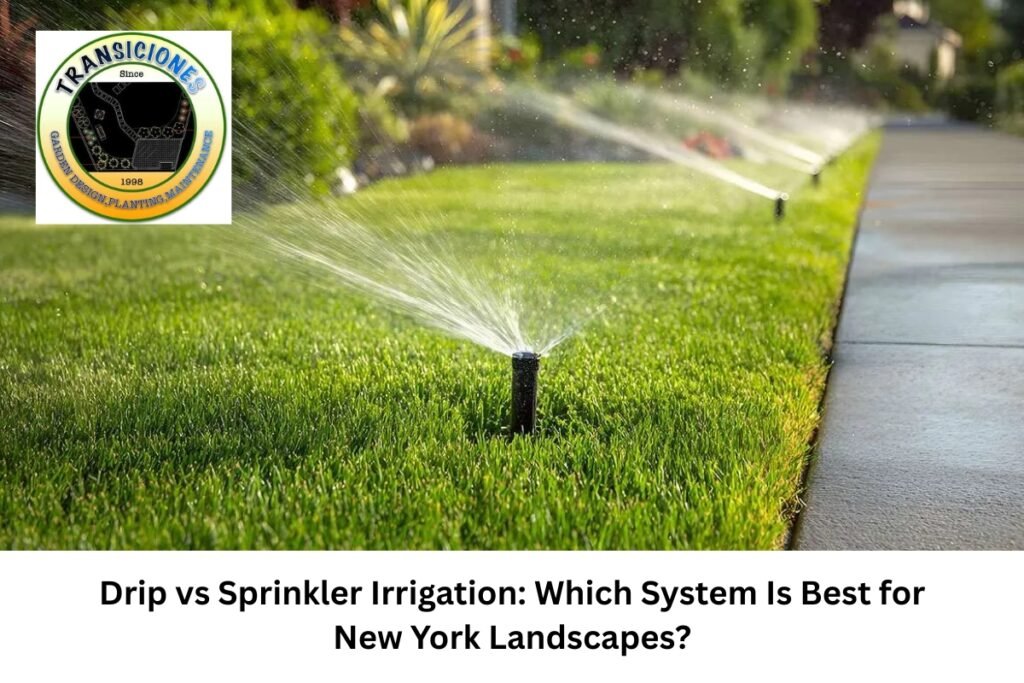
Sprinkler systems spray water over a wide area and are commonly used for lawns and large open spaces. Types include pop-up heads, rotors, oscillating sprinklers, and stationary sprinklers.
Benefits of Sprinklers
- Even Coverage: Excellent for lawns and large turf areas.
- Automation-Friendly: Can be programmed for regular watering schedules.
- Quick Watering: Covers large areas efficiently.
Limitations of Sprinklers
- Water Waste: Higher evaporation and runoff.
- Less Precise: Not ideal for plant beds or shrubs.
- Maintenance: Needs regular adjustment to ensure even coverage.
New York Landscape Considerations
Choosing the right irrigation system in New York requires understanding local factors:
- Climate: Hot, humid summers; cold winters; and variable rainfall.
- Soil Types: Clay and sandy soils affect water absorption.
- Topography: Slopes and uneven terrain may require specialized systems.
- Urban Microclimates: Buildings, heat islands, and wind affect evaporation rates.
- Water Restrictions: NYC and surrounding areas may impose limits during drought periods.
Drip vs Sprinkler: Side-by-Side Comparison
| Feature | Drip | Sprinkler |
| Best For | Beds, shrubs, trees | Lawns, turf |
| Water Efficiency | ⭐⭐⭐⭐ | ⭐⭐ |
| Installation Cost | Moderate | Moderate to High |
| Operation Complexity | Moderate | Easy |
| Seasonal Flexibility | Excellent | Good |
| NY Climate Suitability | Excellent | Good |
Water Usage: Drip irrigation uses less water because it delivers directly to the roots. Sprinklers cover more area but lose water to evaporation.
Maintenance: Drip requires emitter cleaning; sprinklers need adjustment and occasional repairs.
When to Use Drip vs Sprinkler in New York Landscapes
Use Drip For:
- Garden beds
- Trees & shrubs
- Vegetable plots
- Areas with limited water pressure
Use Sprinkler For:
- Large lawns
- Open turf areas
- Athletic fields or play areas
Combining Both
- Hybrid systems are often the best solution: use sprinklers for lawns and drip for beds.
- Zone watering allows precise control and water efficiency.
Seasonal Tips for NY Irrigation
Spring
- Flush systems after winter.
- Adjust drip emitters for new growth.
- Set sprinkler schedules based on rainfall.
Summer
- Water early in the morning to reduce evaporation.
- Monitor soil moisture during heat waves.
- Adjust sprinkler heads and check drip emitters regularly.
Fall
- Reduce watering as temperatures drop.
- Use a drip for perennial and shrub beds.
- Prepare systems for winterization.
Winter
- Winterize irrigation systems (blowout pipes).
- Protect valves and drip tubing from freeze damage.
Cost & Installation Overview
Drip Irrigation Costs:
- Small garden bed: $100–$300
- Larger zones: $300–$800
Sprinkler System Costs:
- Medium lawn: $1,500–$3,000
- Large property: $3,500+ (includes automation and zoning)
DIY vs Professional Installation:
- DIY is possible for drip systems in small areas.
- Professional installation is recommended for large lawns or complex sprinkler systems, especially for compliance with NYC water regulations.
Best Practices for Maintaining Your Irrigation System
- Sharpen mower blades to prevent grass damage (for sprinkler zones).
- Clean drip emitters regularly.
- Adjust sprinkler heads seasonally.
- Mulch plant beds to reduce evaporation.
- Inspect lines and valves before summer and winter.
Conclusion:
For New York landscapes, the best irrigation system depends on your yard type. Drip irrigation excels in efficiency for beds, shrubs, and trees, while sprinklers are ideal for lawns. Many homeowners benefit most from a hybrid approach—drip for precision watering and sprinklers for turf. Seasonal maintenance, proper winterization, and professional setup can ensure your irrigation system lasts and keeps your landscape lush year-round.
FAQs
Q1: Is drip irrigation better than sprinklers for NYC gardens?
A: Drip irrigation is more efficient for garden beds, trees, and shrubs, minimizing evaporation while delivering water directly to roots. Sprinklers are better for lawns and turf.
Q2: Can I use both systems together?
A: Yes. Hybrid systems allow sprinklers for lawns and drip for beds, providing precision and water savings.
Q3: Which system uses less water?
A: Drip irrigation generally uses less water because it reduces evaporation and targets plant roots directly.
Q4: Should I winterize my irrigation system in New York?
A: Absolutely. Water left in pipes can freeze and damage your system. A professional blowout before winter is recommended.
Q5: How much does it cost to install a drip vs. a sprinkler system?
A: Drip irrigation can cost $100–$800, depending on size, while sprinkler systems range from $1,500–$3,500+, depending on property size and automation features.